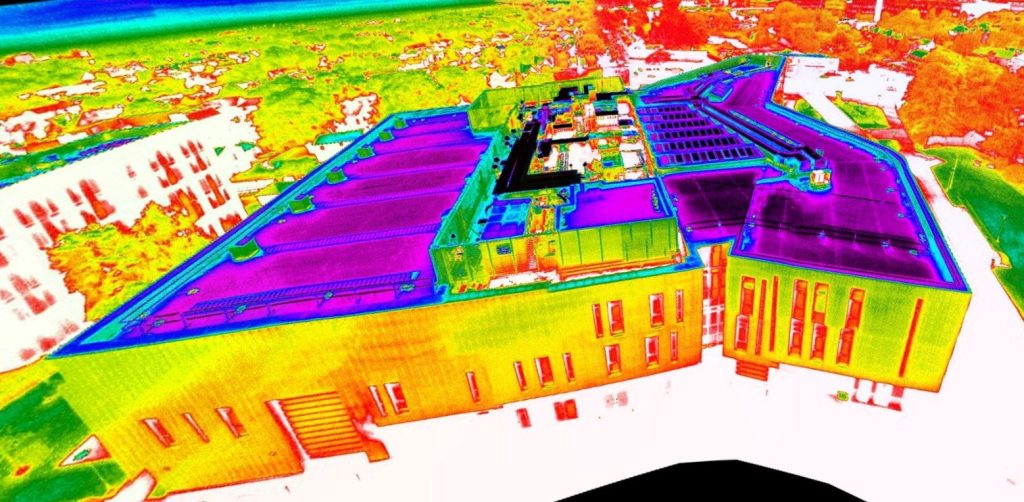
Thermal imaging shows what the eye cannot: where heat is escaping, where water is sitting in a roof, and where electrical or mechanical equipment is running hot. From the air, we can survey large buildings and estates quickly and safely. Thermal data is captured by an ITC Level 1 certified thermographer, and thermal reports are produced to ITC Level 2.
What it findsProblems you can’t see
- Heat loss and missing or failed insulation
- Moisture ingress in flat roofs
- Failing seals and thermal bridging
- Overheating electrical equipment and solar PV faults
- Plant and pipework issues
What you receiveClear, annotated findings
- Radiometric thermal imagery
- Paired visual imagery for context
- An annotated thermal report produced to ITC Level 2
- Findings shared in VueSync
Frequently asked questions
Are your thermographers qualified?
Yes. Thermal capture is carried out by an ITC Level 1 certified thermographer, and thermal reports are produced to ITC Level 2 (Infrared Training Center), so findings are interpreted correctly, not just photographed.
When is the best time for a thermal survey?
Thermal surveys work best in dry conditions with a good temperature difference between inside and outside, typically in cooler months or early morning and evening.
Can thermal imaging find flat roof leaks?
Wet insulation holds and releases heat differently from dry areas, so thermal imaging can highlight likely areas of moisture in flat roofs for targeted investigation.
Can you inspect solar panels?
Yes. Thermal imaging highlights faulty cells, strings and connections on solar PV arrays.
Need a thermal survey?
Tell us about the building or asset and what you are trying to find, and we will plan the right conditions and capture.